Brix for electricians
AI receptionist for electrical service calls
With call forwarding configured, Brix can answer inbound calls, record what the caller reports, and help book eligible work using your CrewBrix schedule and business rules. Your team handles safety decisions, unusual requests, and other exceptions.
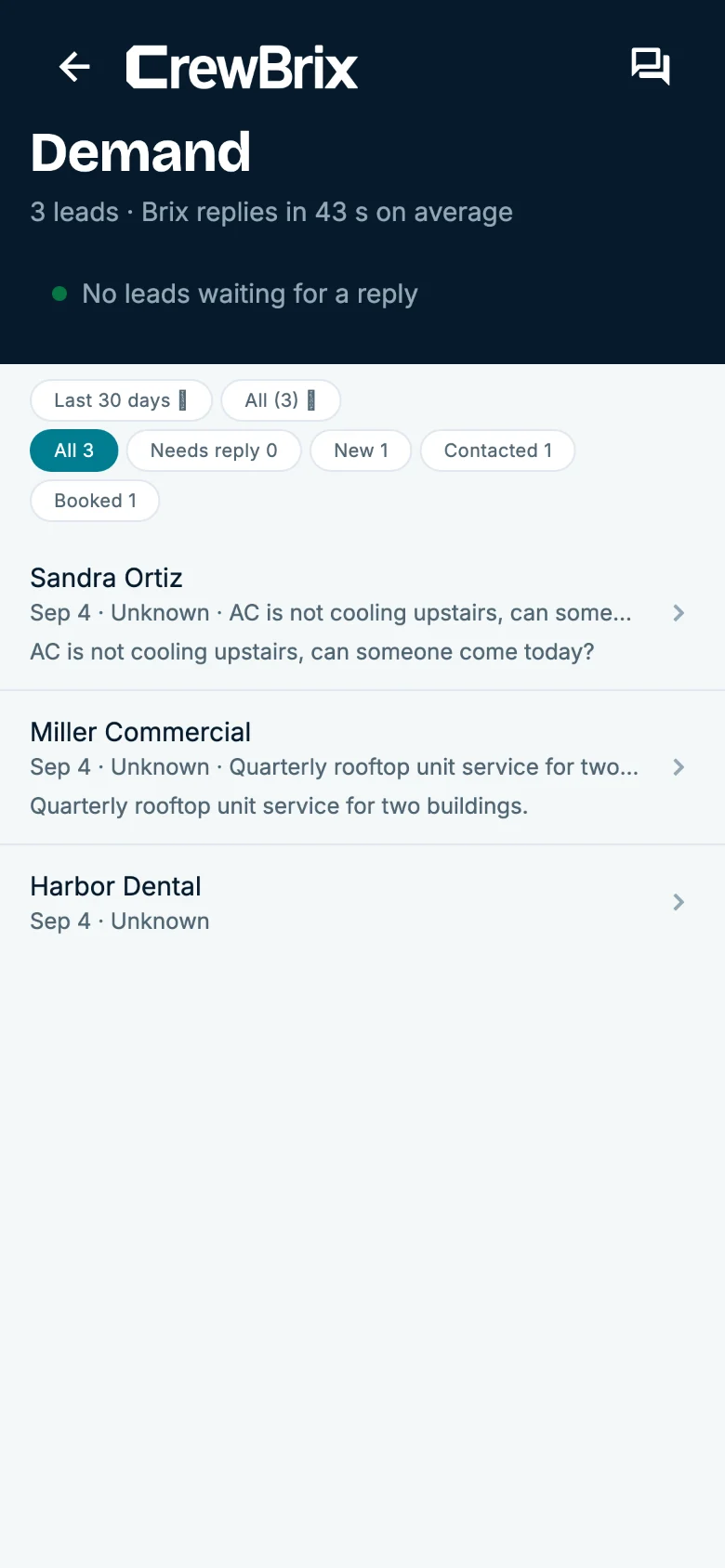
The call
What happens to an electrical service call
- 01
Answer the forwarded call
Where your carrier supports forwarding, Brix can answer while the crew is working or the office is closed. Confirm forwarding conditions, carrier costs, and a fallback before routing customer calls.
- 02
Record the request
Brix collects the caller's contact details, service address, and description of the problem. It records the caller's words; it does not diagnose the electrical issue or provide repair instructions.
- 03
Book eligible work
Brix can use configured availability and booking rules to help arrange an appointment. A request is not a confirmed booking when no eligible time is available.
- 04
Escalate exceptions
Urgent, out-of-area, unavailable, or unclear requests need an assigned person and a tested follow-up process. The captured details remain available for that follow-up.
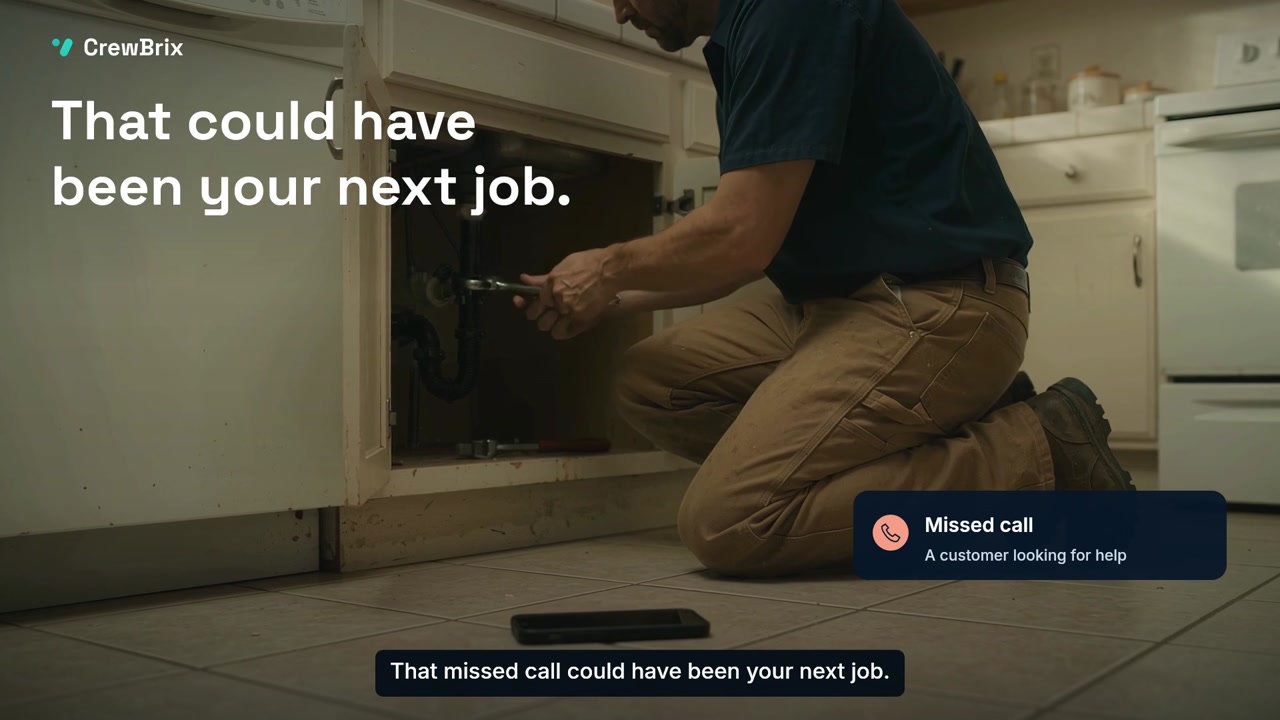
Watch the 60-second Brix AI receptionist example
Follow a simulated plumbing call from intake to booking and follow-up. Includes captions and a transcript. Test your own trade and rules in a demo.
Before Brix answers
Safety and escalation
Set the handoff process before Brix answers customer calls.
- Record symptoms in the caller's words. Do not use AI intake as an electrical diagnosis, safety inspection, or source of repair instructions.
- Agree on who receives urgent and unusual requests, and test that process. Callers facing immediate danger should use emergency services.
- A full calendar, an out-of-area address, or a question requiring judgment must go to a person for follow-up.
Questions
Before you forward electrical calls
See current plans and usage charges, or review electrical scheduling and invoicing.
Can Brix decide whether an electrical problem is safe?
No. Intake records what the caller reports; it is not an electrical diagnosis or safety inspection. Your team must decide who handles urgent or unclear requests and test that process. Immediate danger belongs with emergency services; AI intake is not emergency dispatch.
Can I keep my business phone number?
You can forward calls where your carrier supports it. Confirm forwarding conditions, carrier costs, and a fallback, then test the CrewBrix setup before routing customer calls.
What happens if the caller cannot be booked?
A full schedule, out-of-area request, or question needing your judgment must have a clear next action. Confirm the captured details, the person responsible for follow-up, and the difference between a request and a confirmed booking.
What does an AI receptionist for electricians cost?
Compare the current CrewBrix plans, add-ons, included usage, and extra usage charges on the pricing page. Use your own call volume and job costs to evaluate the total bill. A sample calculator result is not a price quote or a revenue promise.
Review the call setup and exception path
Bring a typical electrical service request. A demo can show forwarding, configured booking rules, the captured request, and the handoff when Brix cannot book the caller.